Photo Workshops vs. Photo Tours

1 Comment

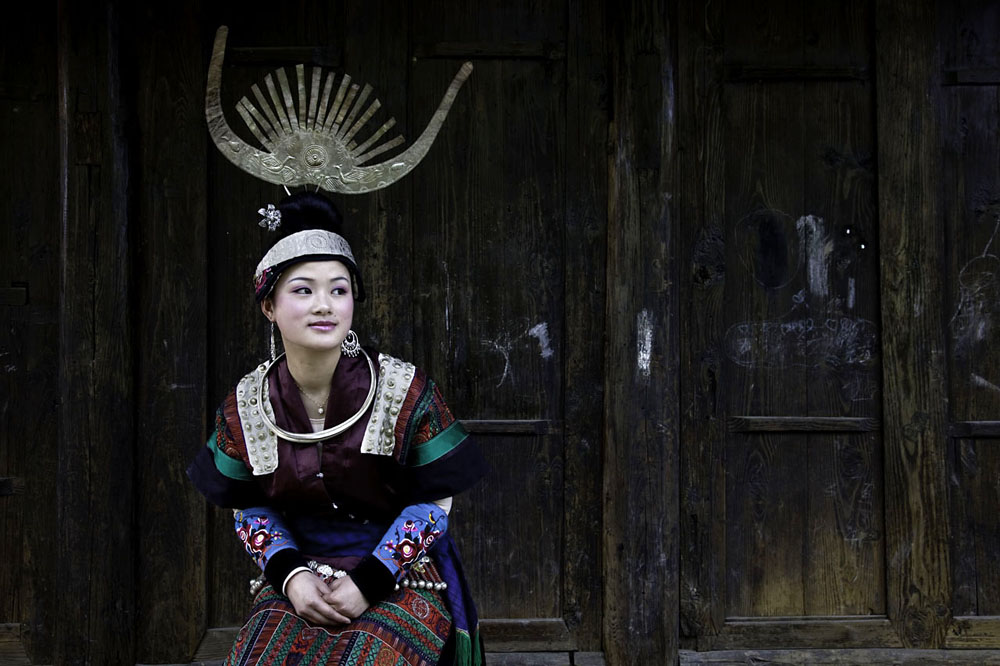
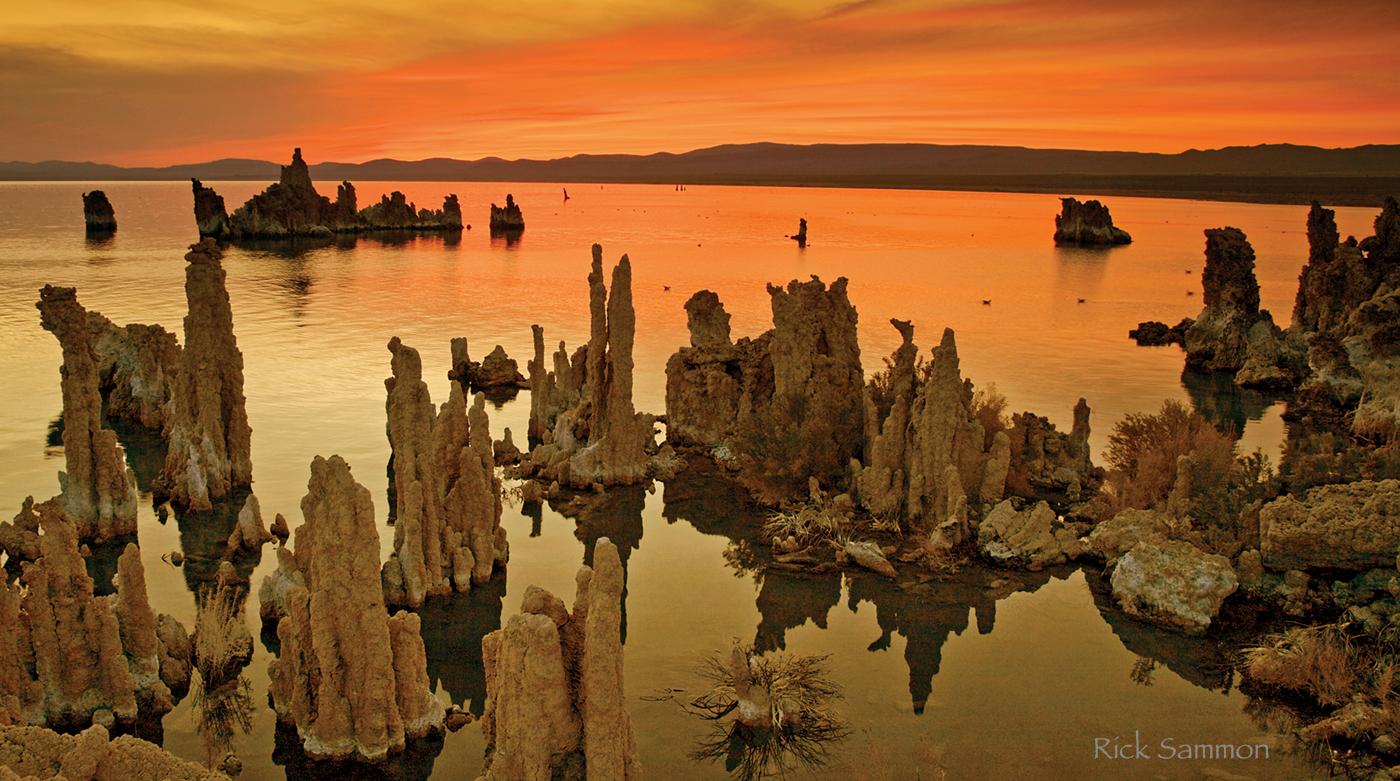
I took the photographs in this post on my 2012 Death Valley Workshops with The Digital Photo Workshops. We hope you can join us for our 2013 workshop.

• • • 

Because I lead many workshops around the world, photographers often ask via email: "What's the difference between a photography tour and a photography workshop?"

Before I get going here, photo tours are great . . . for those who want to go on sightseeing tours. Workshops, like the ones I lead, are designed for photographers who want to grow and expand their creative vision.


My response:

Workshops: Designed to get you the very best shots from dawn to dusk. Getting up at 3 AM is no prob.
Photo Tours: Leave at 9 and set your day around meals.

Workshops: If you are driving and see something good, stop and shoot.
Photo Tours: Keep on driving.

Workshops: Usually cars or 4W drive vehicles.
Photo Tours: Bus tours.

Workshops: Hands-on training - daily - by the instructor or instructors.
Photo Tours: You are on your own.

Workshops: Photo reviews almost daily.
Photo Tours: No reviews.

Workshops: Photoshop and Lightroom advice and help.
Photo Tours: Computers are not even required.

Workshops: Group slide show.
Photo Tours: Only show is to show up for dinner.


Workshops: Leave on-time for sunrise.
Photo Tours: Who cares if you are late?

Workshops: Briefing on each location as to lenses, settings, etc.
Photo Tours: Very little suggestions by leaders.

Workshops: Instructors ask you how you are doing.
Photo Tours: Leaders are there only as tour guides.

Workshops: If you find something really cool to photograph, the groups changes plans so all can get great pictures.
Photo Tours: Get to the next stop.

Workshops: Instructors share their shots on their camera's LCD monitors so others can see and learn.
Photo Tours: Instructors are often fist on the spot.


I hope to see you on one of my workshops someday. See this facebook page to see the work of some of my recent students.

If you plan on shooting in Death Valley, here's my gear reco list.

Explore the light,
Rick


Junkyard Shots From My Canada Workshop

4 Comments

Today was day two of my photo event up here in Canada with The Photographer's Lounge, which is headed up by my friend Kevin Pepper. What fun.

We took our workshop students to a junkyard for an HDR and model shoot. Afterward, we had a quick download and review session. We were assisted throughout the day by our mutual friend Tom Baker, known for his wonderful HDR work.

We focused on making pictures, rather the just on taking pictures.

Here are a few my favorite shots, all of which were processed with a touch of Nik's Snapseed.

We'll be using Snapseed, and other Nik plug-ins, on the images we take on my Coney Island Photo Walk next month.


Morgan Oldershaw was our model for the shoot. Thanks, Morgan, for being such a good model - and sport.


Above is an in-camera HDR image I captured with my Canon 5D Mark III.


Above is another Canon 5D Mark III in-camera HDR image. Both images were hand-held.

For more in HDR, check out my app, Rick Sammon's iHDR.


At the beginning of the workshop I suggested to the workshop participants that they try to "tell the whole story" of the junkyard. Taking close-ups and focusing on details and patterns helps achieve that goal. This photograph illustrates a composition technique: rule of odds. I talk about that and other rules in my latest Kelby Training class: Composition, the strongest way of seeing.


Kevin and I hope to see you on one of our workshop. Good photo ops, good people, good image process . . . and good fun!

All my events are listed on my facebook events page.

If you were on the workshop, please share your photographs on my workshop photos page. In fact, if you have been on any of my workshop, please share your photographs on that page.

Explore the light,
Rick

P.S. My next Junkyard shoot is in Atlanta with my friend Glenn Taylor.

My Classes at the California Photo Fest

Comment

I'm getting ready for my classes at the California Photo Fest next month. Can't wait!

I'll be teaching Social Media Marketing, which includes info from my Social Media Marketing for Photographers app.


I'll be leading a few photo walks, at sunrise and sunset and in between. The highlight being a photo session with horses running on the beach.


I have a speedlite class, where I will share a few one-light wonders, some of which are included in my apps.


And I have two plug-ins sessions where I'll talk about removing the reality from a scene, as I did below on my image from Coney Island.


I hope to see you at the festival. It's not only a great learning experience, but it's a ton of fun!


Explore the light,
Rick

P.S. Click here to see all my events, which includes my Alaska workshop with Hal from Light.


10 Countries, 10 Days, 10 Tips: Day 7 - Churchill, Canada

Comment
Rick Sammon photograph.
It's Day 7 of my travel series here on my blog. Thanks for joining me.

Location: Churchill, Canada.

Tip: Photograph the polar bears in winter, when there is snow and ice on the ground.

Rick Sammon photograph.
Photographers from around the world make the trek to Churchill to photograph the polar bears. Some stay in lodges, but I think you'll get a higher percentage of good pictures and have a better experience if you stay on site in a polar buggy or tundra buggy, as I did (see below).

Rick Sammon photograph.
If you do stay in a polar or tundra buggy, be sure to have toe-warmers. Even though the vehicles are heaters, your toes may get chilly . . . because it can be 35 degrees below zero outside.

Rick Sammon photograph.
When it comes to lenses, the longer the better. The polar bears come up to the vehicles, but photos taken that close look as though they were taken in a zoo.

Rick Sammon photograph.
You definitely want to photograph the animals from a distance.

Rick Sammon photograph.
Most of the time you'll be shooting through a window from the vehicle. But if it's safe, you might be able to shoot outside the vehicle. The photograph directly above illustrates a basic composition rule . . . the rule of odds. For more tips on composition, see my Composition class on Kelby Training.


When photographing white subjects, set your exposure compensation to +1 as a starting point for a good exposure. As always, check your histogram and highlight alert.

Rick Sammon photograph.
Above is a shot of our polar bear caravan. We had a vehicles for eating, sleeping, dining and partying. Good fun.


My favorite and recommended lens/accessory for this trip:

I hope to see you on one of my workshops someday.


Explore the light,
Rick

What's Your Favorite National Park - and Why?

18 Comments
Bryce Canyon National Park. © Rick Sammon
I'm on a National Park kick today. I was just wondering: What is your favorite National Park - and why?

Post a comment in the Comments section here on my blog. I - and other blog followers/National Park lovers - would love to hear your thoughts. What's more, if you have pictures, include a specific link. Share and share alike.

Mt. Rainier National Park. © Rick Sammon 
Explore the light - and explore the wonders and beauty of our National Parks.

Zion National Park. © Rick Sammon
Arches National Park. © Rick Sammon
If you enjoy or parks, and want to help preserve them, check out the National Parks Conservation Association.


All the photographs in the post were taken with my Canon digital SLRs and Canon lenses. See my Gear page for info. Enjoy the weekend!
Rick

P.S. If all these pictures look sharp, it's because I sharpened them with Nik Software's Sharpener Pro. You can get a 15% discount on all Nik Software if upon check out you use this code: RSAMMON.

New Zealand Workshop Offers Spectacular Photo Opportunities

1 Comment
In March 2012, New Zealand photographer Petr Hlavacek and I will be co-leading a photo workshop to New Zealand. I can't wait for the trip, but I have to :-)

So for now, here is a preview of what we'll be photographing. Take it away Petr.

Petr (pictured above in shorts) and I will be co-leading a once-in-a-lifetime photo tour/workshop to New Zealand in March 2012. Here is a preview of what the participating photographers will be photographing. Shoot me an email if you want to join the photo fun.

This will be one of the best-priced and most exciting New Zealand workshops on the web. 


Important note: Airfare will not be included so you can book the most practical flights – which is very important on a long trip.

All of these New Zealand pictures were taken by Petr.

Take it away Petr.

• • •

To some, it may sound strange that a flash can be used for capturing images in the extremely bright glacier environment. Well, most of the time it is true that you don't need to use the flash. However, there are cases where it pays off to consider using one.

In the follow two examples, I'd like to demonstrate the difference a flash can make when photographing glaciers. Keeping an keen eye on the structure, the layering of the ice, and seeking interesting patterns is the way to determine if a flash will give you the best result.

On site, if you zoom in on an image on your camera's LCD monitor, and when you are back home and view your images on your computer, you'll see that the flash may often separate icy layers due to the ice density. I'm not a scientist, but I assume that this has to do with the amount of air bubbles in the glacier ice, and thus its reflectivity/absorbing capacities of the flashed cold light, being based around the blue range of the color spectrum, similar to the glacial ice.

The image above was made without a flash. The viewer tends to look right through the opening in the ice toward the mountains, initially not paying much of an attention to the ice itself, and using it rather as a natural frame before coming back to it and observing the ice dimples and other details.

The image above tells a different story. The viewer is attracted by the patterns, textures and layering of the ice straight away – before looking further toward the mountains.
This flashed image, with its icy layers in this case, reminds me of a human eye with eyelashes.

The two images are of the same scene, but offer different experiences. Which one do you prefer? I think both image work well, as they both have their own beauty.

Along the lines of using a flash, I'd like to give you an example of when using a flash in an ice cave is not always a good idea.

The image above was shot without a flash. The melting ice and its ice pockets create a beautiful, almost 3D texture on the walls of this blue ice cave.

The image above was shot using flash, and all that magic is completely gone. The image is flat, washed out, and lacks the natural color of the ice cave.

The following images of New Zealand's native Nikau Palms are a great examples of when to use a polarizing filter, and when you may not want to use one. The images were made immediately after a hard rain while it was still drizzling. The rain made the leaves reflective, giving them a great dark green color, created by heavy clouds of the stormy, overcast day.

The image above has no polarizing effect employed, rendering the green as a dark and cold. It feels almost like the leaves are made of steel.

The image above shows the polarizing effect on the leaves, which took that beautiful steel shine away, rendering the green as a warm, juicy and green color. The image feels a bit flat, with low contrast – shifting colors from what I had seen and felt.

To me, the first image without a polarizing filter is much stronger, with rather unique colors giving the image more definition and depth.

The image above shows the winter sunrise over Lake Matheson. It's on our "shot list" and is the most photographed lake in New Zealand.


Note: All RAW files of these images have been processed using Lightroom and Photoshop CS4/5 with standard color and tonal corrections to render scene as real as I experienced in reality.

• • •

To see more of Petr's wonderful work, check out his Web site.


Petr is also a founder and co-owner of New Zealand image stock library NZICESCAPES IMAGES, specializing in imagery from a diverse West Coast of the Southern Alps in the South Island, with focus on the glaciers and its ice.

We both hope you can join us in March 2012 for our photo tour and workshop!

For info on all my photo tours and workshops, click here.

Explore the light,
Rick


P.S. I took these two photographs in Antarctica. I love blue ice - and can't wait to photograph it in New Zealand!

Little of what we look at do we see

2 Comments
"Little of what we look at do we see." Richard Fahey

That's an important quote for photographers, because it's so very true.

It's the same with music, by the way: We listen to little of what we hear. Any musician can tell you that.

I experienced the "looking/seeing" difference while on an expedition to Antarctica. We were riding around in a Zodiac when I noticed an interesting ice formation (bottom photograph). I said, "Look, look," w/out saying what I saw (top photograph). Only two of the eight people in the Zodiac saw it: an ice sculpture of a polar bear - complete with eyes, ears, nose, mouth paw, knee and foot!

I asked the Zodiac driver to maneuver around the ice formation to find a "cleaner" view of the ice sculpture. We found one, and we all took the same photograph of what I believe is the first sighting of a polar bear in Antarctica.

Explore the Light,
Rick