Good Photographs Have Three Key Ingredients

1.jpg

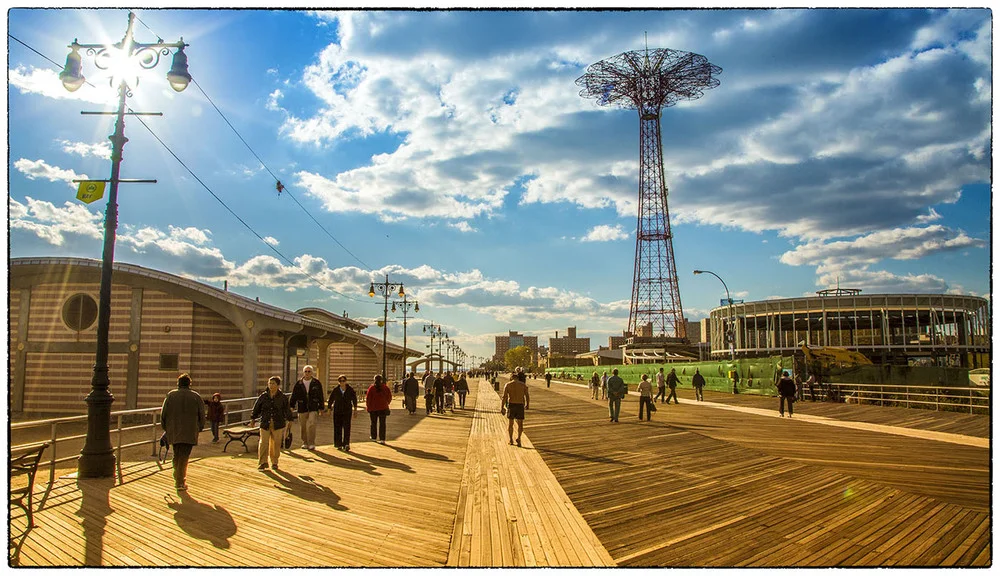
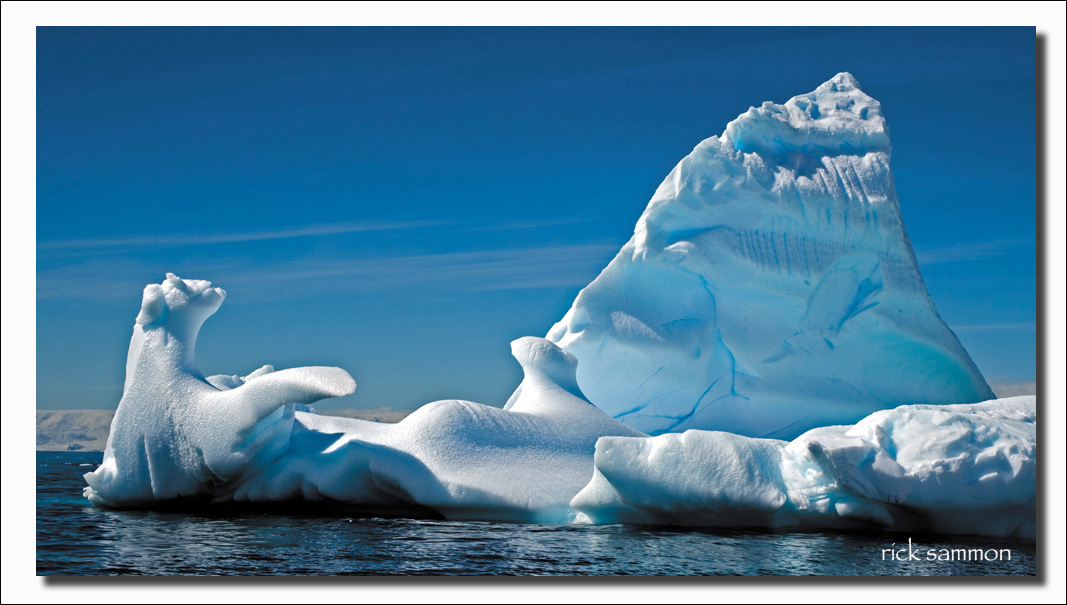
When it comes down to it, good photographs have three key ingredients: an interesting subject, good composition and a good exposure.

Interesting subjects are subjective to a degree. Good composition and a good exposure are subjective, too. That's what makes photography – and all art forms – so personal.

From your personal point of you, it's important to pay careful attention to these key ingredients. Sure there are rules to follow, but it's important to break those rules . . . to follow your heart. And sure, it's good to listen to the advice of pros in portfolio reviews, but first listen, and then digest what they say. "To thine own self be true," as my mother used to say.

I'm not big on photo competitions, as judges choose winners based on their own subjectivity. But that is not to say that you should not enter a competition. Getting feedback is always good, as long as you take it with a grain salt.

And speaking of rules, you'll see that I started two sentences here with "And" and "But," something the nuns in Catholic grammar school told me was against the rules. Hey, it works for me, but might not work for an English teacher reading this blog. Or you.

All that said, a starting point for a good photograph is a good idea. I have two classes on Kelby Training that will help you get started. One is on Composition and the other is on Light. Check 'em out on my On-Line Training page. Both classes have been viewed more than 7,000 times, and I'm happy I got (a word the nuns frowned upon) a few folks started.

In viewing these classes, keep in mind the very personal aspect of photography . . .  yours and mine. As 1960s rockstar/heartthrob Ricky Nelson sang, "You can't please everyone, so you gotta please yourself."

If you like the stuff you see here on my blog, you can subscribe here.

Also, leave a comment on how you feel about your photography. Are you out to please others, or yourself? I'd love to hear from you.

If you like stuff like this, you can subscribe to my blog here.

Explore the light,
Rick

P.S. I took the opening photograph for this post in Antarctica, where the photo below of me was taken. Brrrrrrrrrr.

This post sponsored by Perfectly Clear - super sharp photos with super low noise.
rick sammon.jpg

What is Man Without the Animals?

rick sammon copy 6.jpg

"What is man without the animals? If all the animals were gone, man would die from a great loneliness of the spirit. For whatever happens to the animals, soon happens to man." – Chief Seattle.

When you are shooting around water, protect your camera with a waterproof or weatherproof case. Don’t change lenses when the wind is blowing. You may get salt spray on your camera’s image sensor.

Sea Lion Pup, Galapagos Islands

Tech info:
Canon 1Ds Mark II
Aperture Priority Mode
Canon 100-400mm IS lens @ 400mm
ISO 200 • 1/250th sec. @ f/8.0

This is a page from my app, Life Lessons We Can Learn From Mother Nature. See My Apps page for details.

If you like the stuff you see here on my blog, you can subscribe here.

Explore the light,
Rick

This post sponsored by X-Rite - Color Perfection from Start to Finish.

Never Mistake Motion for Action

© Rick Sammon.jpg

Ernest Hemingway: "Never mistake motion for action."

Big difference.

Are you just moving along in life . . .  or taking action?

Hemingway was also big on focusing one's attention, which is exactly what the bald eagle in this photograph is doing.

Careful focus pays off.

Gear info:
Canon 5D Mark III
Canon 400mm DO lens - one of my favorite lenses for wildlife photography.
All my gear is listed on my Gear page.

If you like the stuff you see here on my blog, you can subscribe here.

Explore the light,
Rick

This site powered by (designed and hosted on) Squarespace. Use one-click to get started with your own awesome Squarespace site.

This post sponsored by Adorama - great gear at great prices.

Seven Tips for Speedlite-in-a-Softbox Shooting

rick sammon speedlite 1.jpg

Got a speedlite? Add a softbox and you are on your way to making some awesome portraits - without making a huge investment in lighting gear.

All the photographs in this post were made with just one Canon Speedlite in a 28-inch Westcott Apollo softbox. You can read more about my gear on my Gear page.

Here are seven tips to help you on your way.

1 - Use a softbox with a recessed panel. The recessed panel directs the light for more creative control over the light. Also note these two very important adages about light: the larger the light, the softer the light; the closer the light, the softer the light.

2 - Position the speedlite so that the flash head is facing toward the back of the softbox, and set the zoom on the speedlite to the widest setting (to spread the light to the max).

rick sammon speedlite 2.jpg

3 - Don't point the softbox directly at the subject. Rather, position it so that the light falls slightly in front of the subject. This is called "feathering the light."

4 - For starters, position the softbox in front of,  above eye level, and to the left of the subject - at about 11 o-clock. Many master painters liked the natural light coming from this angle. The first two portraits in this post were taken with the light set approximately at that angle.

5 - Shoot connected to your computer - tethered, or with a wireless transmitter, or with an Eye-FI card. Seeing a large picture on a computer monitor is much more accurate than looking at a small image on the back of your camera.

rick sammon speedlight a.jpg

6 - The softbox positioning tips I gave were just the start of the speedlite fun. There are many more positioning options, including positioning the softbox directly above  the subject, as illustrated above.

7 - Keep in mind that moving the softbox a few inches can make a big different in lighting. The same goes for the subject: turning one's head even slightly can dramatically change the shadows in a picture.

You'll find more lighting tips in my apps, which are listed on my Apps page.

Hey, if you have a quick tip that you'd like to share here, post it in the Comments.

If you like stuff like this, you can subscribe to my blog here.

Explore the light,
Rick

This post sponsored by Westcott. Check 'em out for all your lighting needs.

Plug-ins: Rant or Rave?

rick sammon-1.jpg

I recently read an article by a photographer who was ranting against plug-ins, kinda dissing them as a cop-op way to turn a not-so-great shot into a totally cool shot.

Well my friends, compare the image above, enhanced with Nik Software's Color Efex Pro (Bi-Color User Defined, Detail Extractor and Image Borders), to the straight out of the camera shot below. I took the grab shot during my Coney Island photo walk workshops while waking down the boardwalk.

rick sammon.jpg

I think effects like this are something to rave about. What do you think? Post a comment here and join the conservation.

I also think plug-ins can help photographers awaken the artist within. Sure, getting the best possible in-camera exposure is key. But when we remove some of the reality from an image, by changing the color or sharpness or saturation, our pictures can become more creative. More artistic.

What's more, plug-ins are fun to use. And what's wrong with having a little digital darkroom fun?

All the plug-ins I use are listed on my Save on Creative Plug-ins Page.

Explore the light,
Rick Sammon

P.S. I like straight shots, too :-)