Photomatix Pro 5 is Here - for the best HDR ever.

rick sammon-1.jpg

Good news for HDR photographers: Photomatix Pro 5 is the best version every for the best HDR. New features include: Contrast Optimizer Tone Mapping for realistic-looking results, new Fusion method for real estate photography, multiple batching settings, and an option to enable fusion from a single RAW file. All very cool features. If you can't wait to order Photomatix, click here to get to my Play & Save on Plug-ins page.

Screen Shot 2013-11-20 at 7.38.53 AM.png

To test drive Photomatxi Pro 5, I reprocessed one of my favorite HDR sequences, taken in the Colony Hotel in Delray Beach on my Florida Photo Caravan workshop.

Screen Shot 2013-11-20 at 7.34.55 AM.png

Here's a look at the new interface, and here are a few quick tips: work with the histogram displayed, play with presets, start by adjusting the black and white points to control the shadows and highlights in the scene, use lighting adjustments to eliminate halos - the dead giveaway to a poorly processed HDR image.

You can download Photomatix Pro 5 (and save 15%) from my Play & Save on Plug-ins page. All of my favorite plug-ins are listed on that page.

Explore the light,
Rick
Awaken the Artist Within at Photoshop World – with Plug-ins & Some Basic Photoshop Enhancements

© Rick Sammon 1.jpg

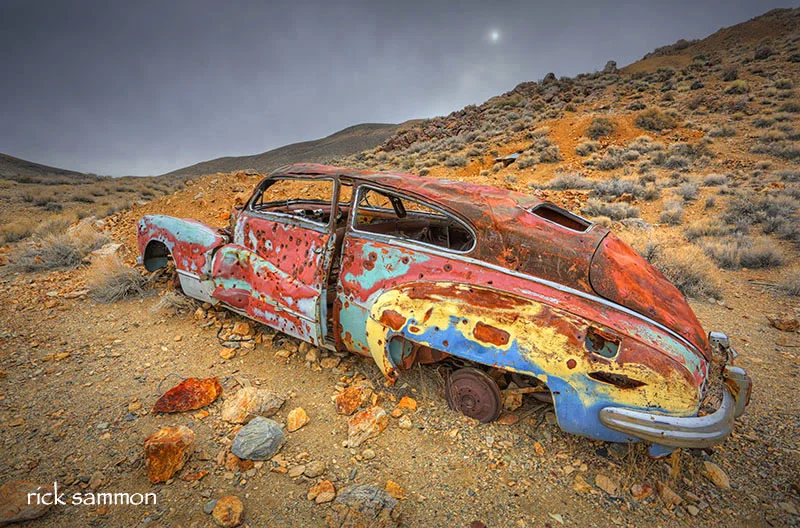
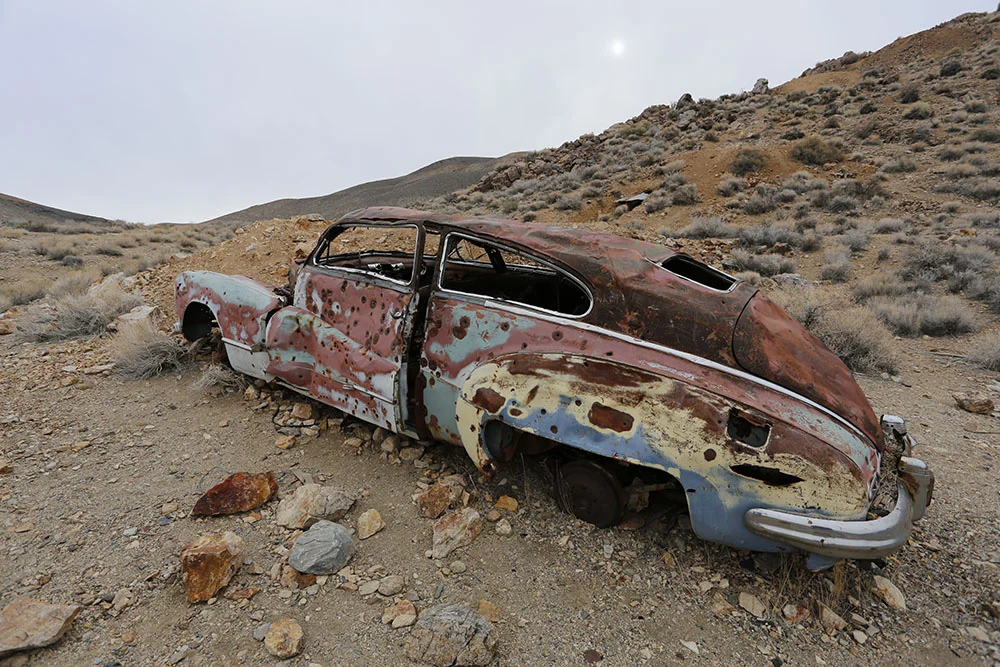
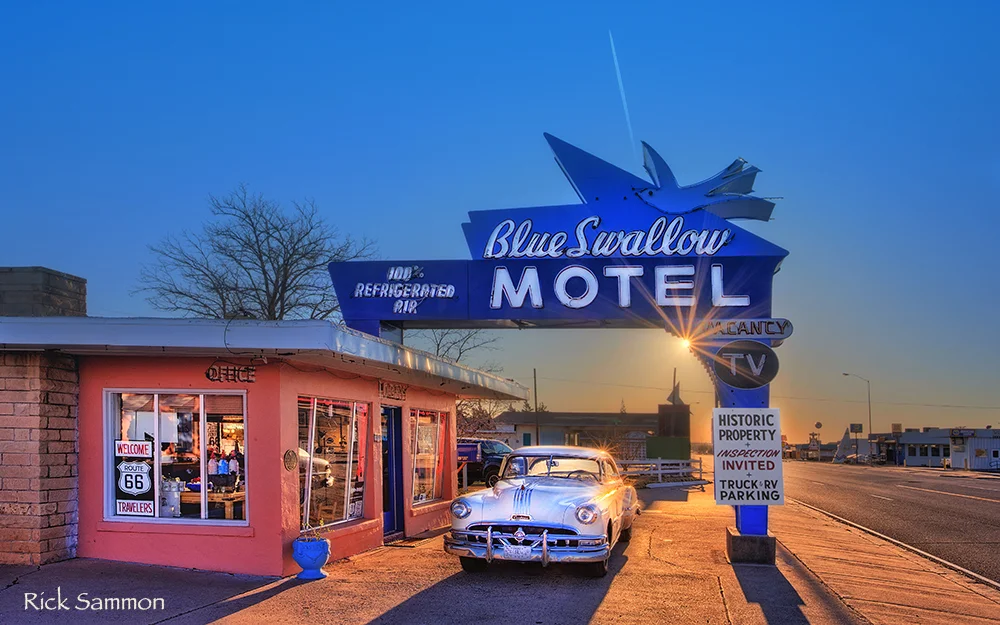
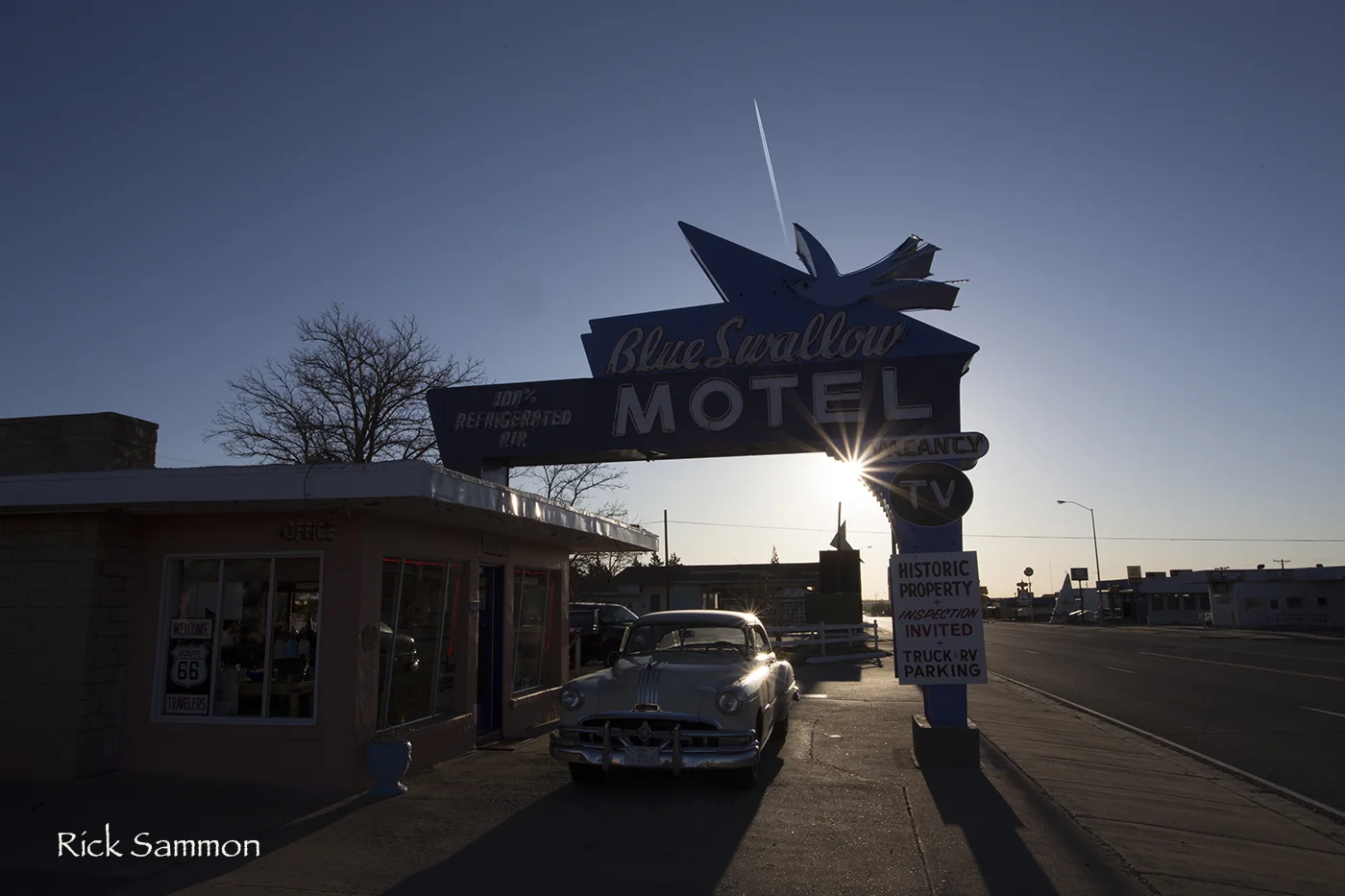
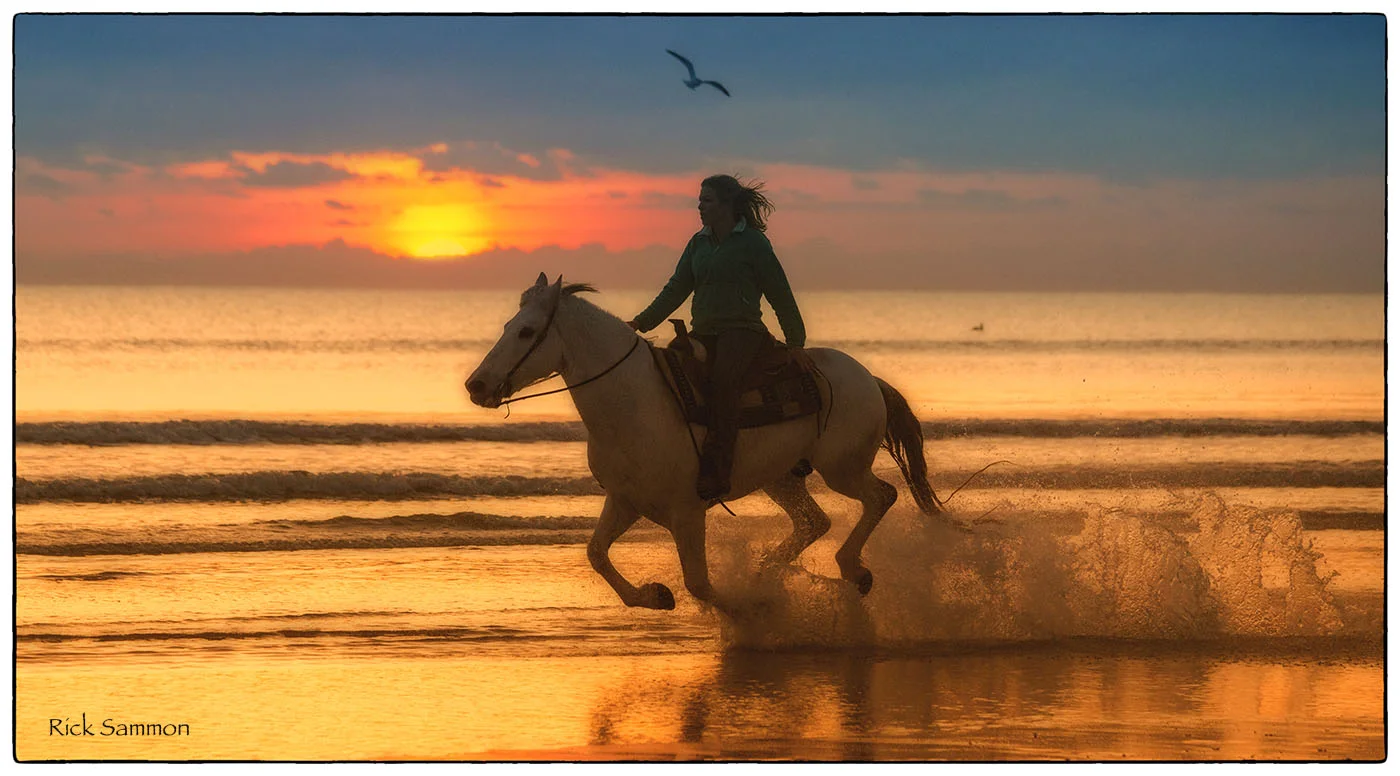
I'm a big fan of plug-ins, because then can transform an OK image (below) into a much more creative image (above). Combined a plug-in effect with some basic Photohshop/Lightroom enhancement and you are on your way to awakening the artist within.

rick sammon 2.jpg

I teach plug-ins on my workshops - and I am giving a seminar on plug-ins (Nik Sofware, onOne Software, Photomatix and Intensify Pro) at Photoshop World 2014 in Atlanta. So yes, HDR will be included. Sign up for Photohshop World today!

rick sammon old car 2.jpg

Above, after. Below, before.

rs.jpg

I am looking for 10 or so original images (straight shots) to play with during my plug-in class. I set up a new Google+ Community – Awaken Your Inner Artist – for just that purpose. Check it out, and post a picture if you plan to attend PSW.

rick sammon.jpg

Hope to see you at PSW in Atlanta.

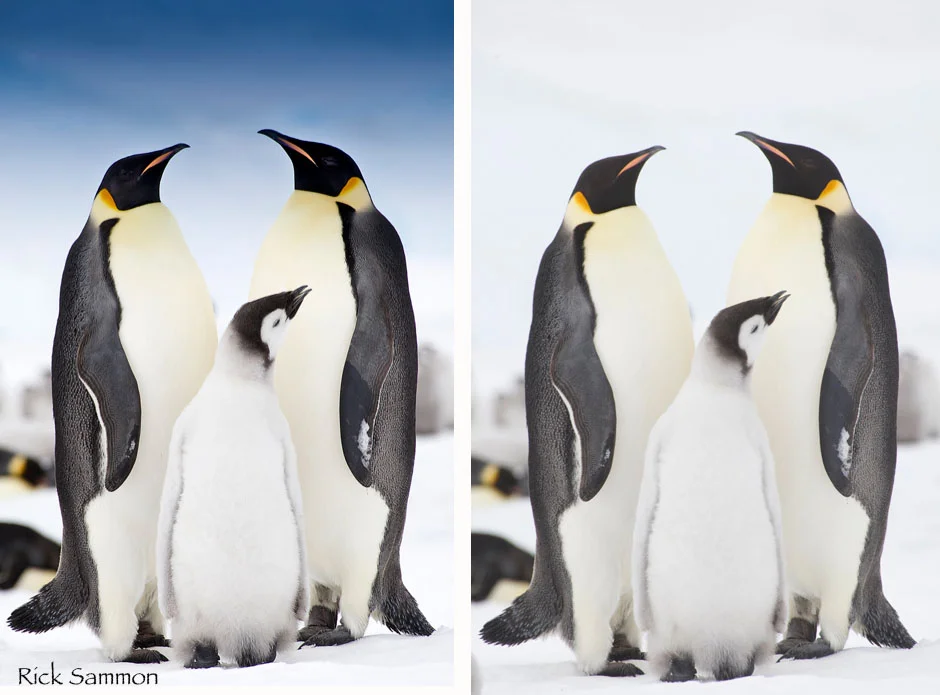
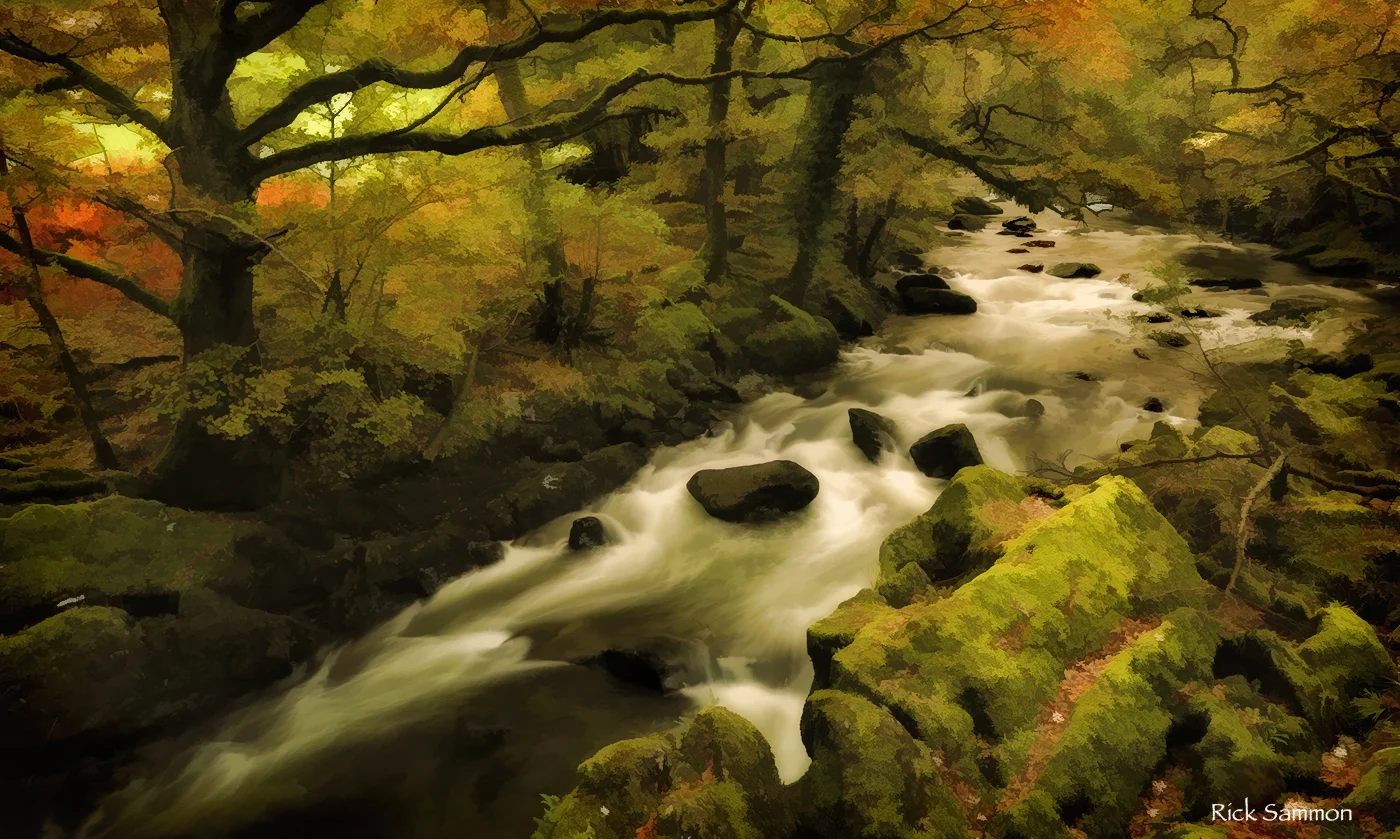
Until then, below is another before-and-after example of how a plug-in (Nik HDR Efex Pro) and few Photoshop enhancements turned a dull shot into a cool shot.

rick sammon.jpg

All the plug-ins I use are on my Play and Save on Plug-ins page.

rick sammon Before.jpg

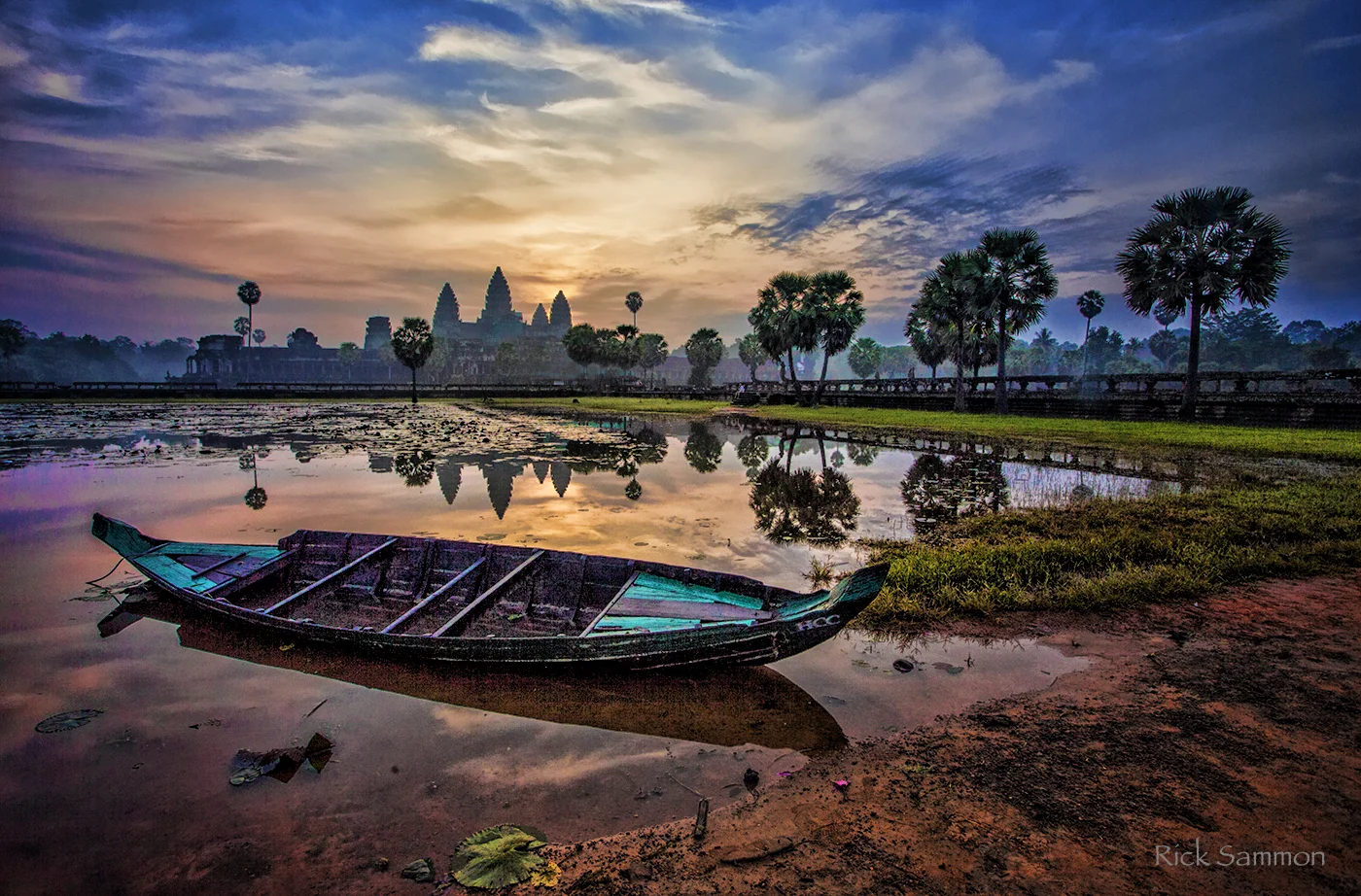
Topaz simplify, just one of the plug-ins I use, is on sale for 50% off until the end of February. Use this code - febsimplify - and this link. I used that plug-in to create the image below.

topaz simplify.jpg

It's amazing how much we can pull out of a RAW file, and how plug-ins can be used to enhanced an image.

rick sammon aw after.jpg

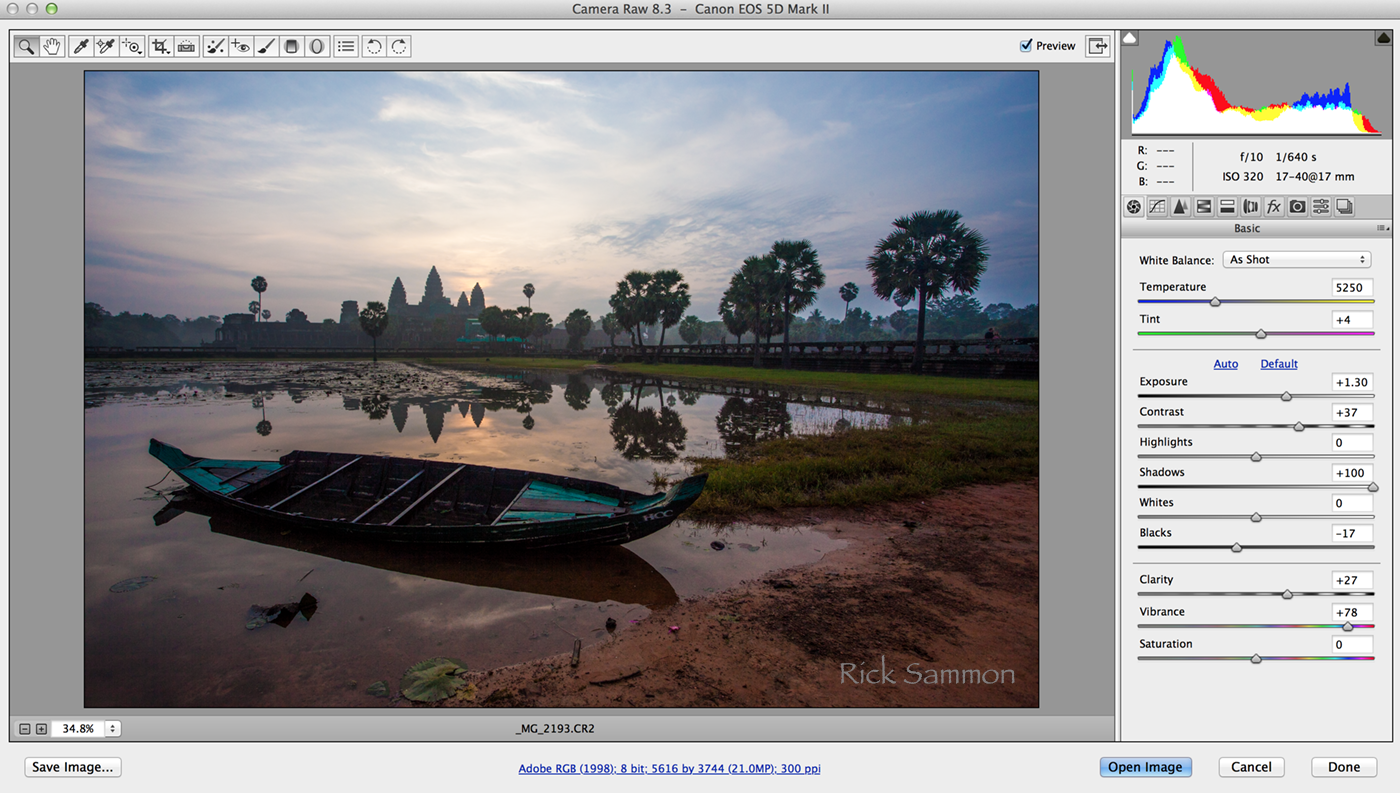
The above image is the result of using some of the controls in Camera RAW and Nik's Color Efex Pro. . .  and then mostly the Spicify filter in Topaz Adjust. The image below is a screen shot of my RAW file in Camera RAW. If you don't have the Topaz Labs plug-ins, you can save a bundle on a bundle. Again, info on all my plug-ins here.

rick sammon aw before.png

Explore the light,
Rick

Today's Awesome Guest Blogger: Jeff Cable

I recently returned home from Sochi, Russia where I photographed my 4th Olympic games, and while I was there, I was happy to see an email from Rick asking me to contribute to his amazing blog. I consider that an honor, almost as much as shooting the Olympics for Team USA.

Since getting home, the number one question I get is, “How was Russia?” and the second most asked question is, “What was your biggest challenge there?” Russia had its challenges, with less than ideal lodging and food, but we made the best of it and enjoyed the Games. The biggest challenge when shooting almost any Olympics, is trying to capture photographs that are different from the other 1000 photographers who surround me.

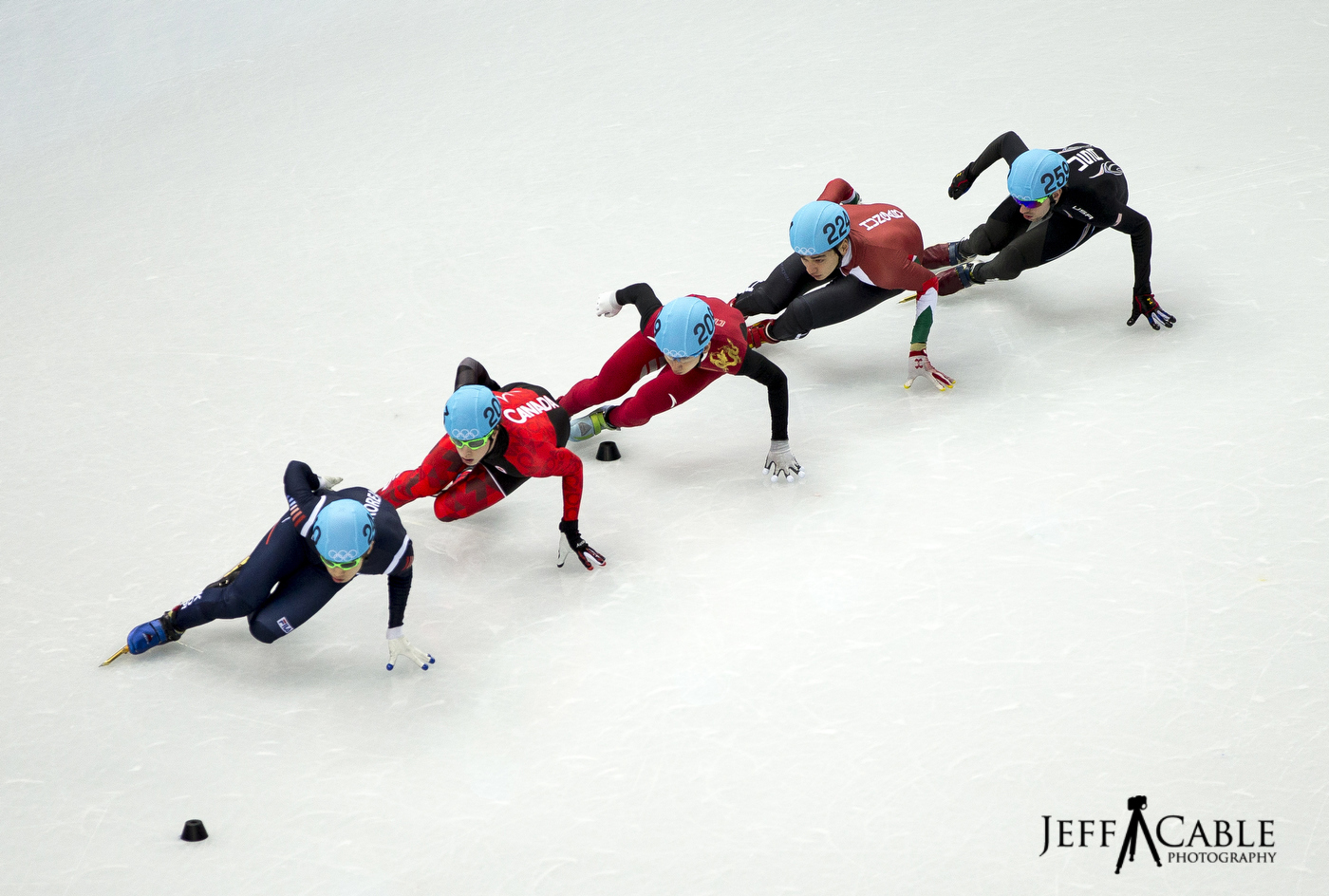
I took the opening photograph in this post from a high position using a Canon 1DX and the new Canon 200-400mm lens.

I love shooting with a camera that can capture 12 photos per second. With so much fast action happening around me, it gives me a better chance of freezing that exact moment which tells a story. Now that memory cards are so inexpensive and high capacity, anybody can shoot a lot of photos and keep only the ones that show the best action.

 When photographing portraits, most of time we concentrate on the subject’s eyes. And this is also true when I photograph sports. If you look at almost all of the photos on this page, you will see that the athlete’s eyes are critical to the success of the shot. Having sharp focus on the eyes helps draw the viewer into the image and shows the intensity of the athlete.

It is really nice to have some of the best athletes in the world as my subjects.

For the majority of the photos I am taking at the Olympics, I am shooting at a very fast shutter speed. I am usually in the range of  1/1000 to 1/1250 sec. If you are shooting sports, you should adjust your ISO and aperture to get a fast enough shutter speed to freeze the action.

As the ski jumpers were flying through the air, I was tracking them with the Canon 70-200mm lens. I really love the way that this jumper was backlit by the flood lights.

I always say that a good photographer should be able to shoot photos in any environment. At the Olympics, we are shooting during the day and at night, which poses different challenges, but also provides some fun images. We know how to change the settings of the camera without even looking at the buttons or menus. Many times, we are forced to make split second decisions of shutter speed, aperture, or composition, and need to make changes instantly. There is no time to consult a manual or try to remember how to make these adjustments.

Even though I could have photographed at f/2.8, I chose to shoot at f/3.5 to get a little more of the athletes in focus.

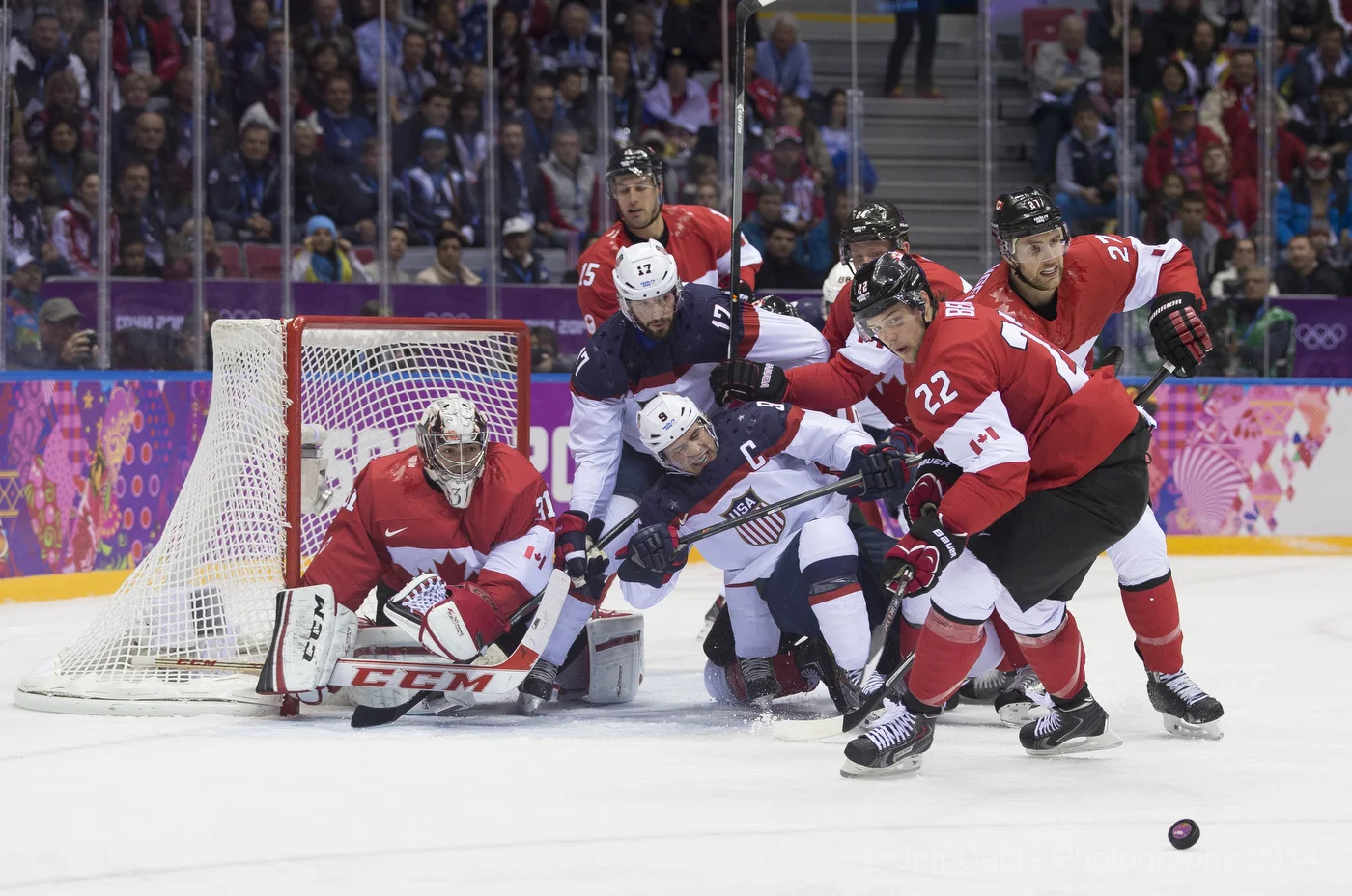
My primary assignment was shooting for USA Hockey, and I captured every men’s and women’s game played. In order to get the best photos, it was imperative for me to stay aware of the game and be ready for any action on my side of the ice. When I shoot an NHL game, we can shoot through holes in the glass, but the Olympic Committee does not allow holes, so we are forced to shoot through Plexiglas. This makes it even tougher to shoot good hockey photos. Most of the time, I would get to the arena two hours before the game started, so that I could find the best location with the cleanest plexiglas (with the least amount of marks from sticks and pucks). Then, I would tape my business card to the wall indicating that was my reserved spot.

My goal is to capture the peak of action at a variety of different sports, and try to do so in a unique way. This might be taken from a different vantage point, a different shutter speed, and with a unique choice of lens.  As you can see from the photo above, this photo was taken from the ice level, where I could see the athlete’s eyes. I also shot photos from the stands, and they are both strong photos, but have a completely different feel to them.

Due to the crazy fast speeds of these sleighs, I actually captured these photos between 1/4000 sec and 1/6000 sec to freeze them.

People ask me all the time, “What is your favorite thing to photograph?” and my answer is usually, “Anything new and different”. Living in the San Francisco Bay Area, I don’t get many opportunities to photograph bob sleigh. So I had a great time shooting these guys shooting flying past me on the ice. I walked most of this venue to see the track before the competition started. I wanted to find a good turn with the Olympic logo showing. Like other Winter Olympics, there were only a handful of the turns, which had the logo. Having this background helps to tell the story of where I took the photo.

The great news is anyone can take great sports photos, and they don’t need to be at the Olympics. Using good techniques and being aware of your backgrounds will help to get sports photos anyone can be proud of.

You can see my free training classes on my web site
and
follow along on my blog.

Thanks again, Rick. Always fun hanin' with you - even if it's on the internet.

Jeff


Tons of Topics at My Salt Lake City Seminar on March 22

I'm covering tons of topics at my Salt Lake City talk on March 22:
- Composition, the strongest way of seeing,
- Light, the main element in every photograph,
- HDR, when it good and when it’s bad,
- Lightroom and Photoshop tips, tricks and techniques,
- Awaken the artist within with plug-ins,
- Noise reduction,
- Travel photography,
- Photographing action,
- Landscape, seascape and icescape photography,
- Black and white photography,
- Shooting on a photo safari,
- What a histogram tells us,
- Wildlife photography,
- Speedlites and lighting,
- Getting and staying motivated!

All my info-packed and fun-filled seminars area listed on my Seminars page.

Explore the light,
Rick
My Mindshift 180° Panorama Backpack Helps Me Gets the Shots

Click images to enlarge.

It was an amazing experience in the Hudson River tonight: That's right! I was actually standing in the Hudson River in Croton-on-Hudson, New York making pictures of the wonderful ice formations. I have lived in Croton-on-Hudson for more than 25 years, and I have never seen a sight like the one I saw tonight. I felt as though I was for in Iceland, where I lead digital photography workshops.

Helping me capture images was my new Mindshift rotation 180 ° Panorama backpack. This backpack offers a totally unique and cool design: it lets you swivel around the belt pack interior for easy access to gear that you can't, or don't want to, put down on the ground – or on the ice. I use the belt pack for lenses and filters, but it's large enough to hold another digital SLR and lenses.

What's more, the backpack is super comfortable . . . and goes well with my red coat! :-)

Click here to learn more about Mindshift backpacks.

All my gear is listed on My Gear page.

I took the opening image for this post with my Canon 5D Mark III and Canon 14mm lens. For the image below, I switched to my Canon 17-40mm lens.

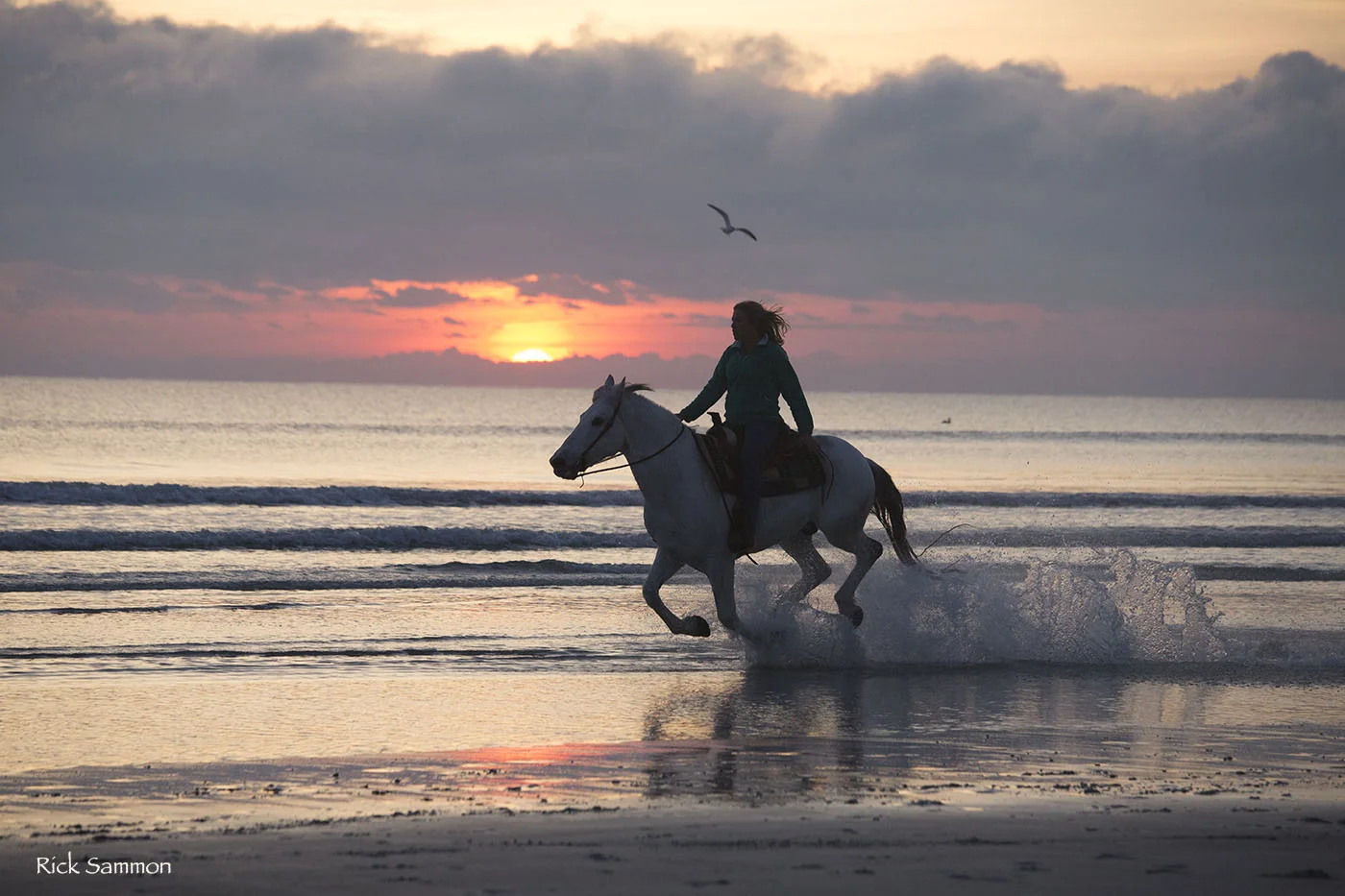
The sunset image above on the left is a HDR shot that I processed in the latest version of Photomatix Pro. The photo on the right is the average exposure of my four-image HDR sequence.

Helping me find the best light, as always, was my Photo Sundial app, which works around the world.

Sure, the wide-angel photo opportunities were awesome. But as I tell my photo workshop students, try to "tell the whole story" of a location. Close-ups helps us do that.

The Hudson Valley is a wonderful location in which to shoot, anytime of the year. In the spring and fall I run a Croton-on-Hudson workshop - where I took the above photographs. Hope you can join the photo experience.

Explore the light,
Rick
P.S. I received a few emails about my boots: Muck boots.