Cool HDR/Model Photography Workshop in Hot'Lanta - Two $200 Goodie Bags Await 2 Lucky Photographers

glenn taylor.jpg

Glenn Taylor and I have a few spots open on our February 28  - March 2, 2013 Atlanta, GA workshop. Here Glenn offers some tips on how he got the shots at our shooting locations.

Info on the workshop is on my Workshops page.
stuff.jpg

Before Glenn gets going, here's some cool news!

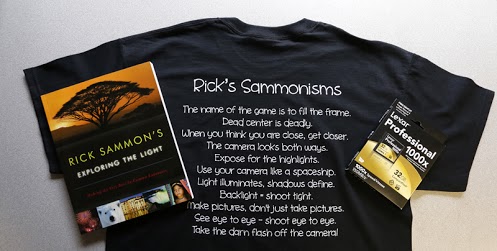
The next two photographers who sign up for the workshop will receive:
• Lexar 32 GB Compact Flash Card

• Copy of my book, Exploring the Light

• My Rick Sammonisms t-shirt (L and XL only)

That's about a $200 value!

Simply sign up on my Workshops page and shoot me an email to tell me you signed up - to ensure your goodie bag.

If you already signed up, your goodie bag will be waiting for you in Atlanta!

* Originally, this said "the next five," but for photographers already signed up.

Take it away Glenn.

Model Shot

My niece was visiting Atlanta for the holidays and I was fortunate to have her model for me at the Rail Museum for some simple off-camera flash images with a nostalgic feel. This museum has some great vintage rail cars and buses that offer some amazing backgrounds to work with.

For this image we set up in the mail car exhibit. It has a nice warm tone with the canvas bags, wooden floors and tungsten lighting. It was very overcast and this car is located within a large shed, so there was no other light than the bare bulbs in the ceiling. I wanted to keep the background warm and rich while getting a little pop from the flash on the model to help her stand out from that background. My niece found the amazing chair in an adjacent rail car and we be both agreed it would make a great prop.

The lighting diagram shows the set-up using a Lastolite Ezybox 20” softbox on an extension pole held over my head as I knelt down with the camera to get an eye-to-eye level with the subject. The car is cramped inside and I wanted the light to reach down to her her boots. I elected to go with the softbox straight on, from over my head, to spread the light evenly and feather down to the floor.

The settings I used are listed here:
Camera: Canon 5D Mk II on manual setting
Lens: Canon 24-70mm L at 40mm
ISO: 800 (I opened this up to help bring up the ambient light in the car)
f 4.0 (to keep focus on the model and let the background be less distracting)
1/60 second exposure to keep the ambient opened up

Canon 580EXII hot shoe flash on manual at 1/8 power
1/4 CTO (color temperature orange) gel on flash to keep skin tones warm
Extended cord from camera hot shoe to trigger flash and control with camera

Okay, let's move on to HDR and details.

1000w.jpg

During our workshop we'll be shooting at two of my favorite locations to shoot HDR and detail images: The Southeast Railway Museum in Duluth, GA and Old Car City in White, GA. Both locations are a treasure trove of heavy metal grunge images. The colors, textures and little details are just amazing!

Sightseeing/cocktail car at the SE Railway Museum (opening image for this post). I can always picture a scene from Mad Men taking place right in this car. This is a 5 exposure HDR, merged in Photamatix Pro and finished in Lightroom - taken with a Canon 5D Mk II and Canon 24-70mm L series lens. This is shot wide (around 34mm) while mounted on a Gitzo tripod with a RRS ballhead.

SERM HDR Stove.jpg

Kitchen car at the SE Railway Museum. The patina of the metal surfaces adds interest to all the geometric shapes in the composition. This is a 5 exposure HDR, merged in Photamatix Pro and finished in Lightroom - taken with a Canon 5D Mk II and Canon 24-70mm L series lens. This is shot wide (24mm) while mounted on a Gitzo tripod with a RRS ballhead.

Old Car City

Old Car City is a similar location with a completely different set of subjects: classic cars that are weathered, rusty and full of character. Just like the trains at SE Railway, HDR and details are everywhere you look.

OCC Office.jpg

The “Office” at Old Car City. The texture around this part of the facility just jumps out at you. This is a 3 exposure HDR, merged in NIK HDR Efex Pro and finished in Lightroom - taken with a Canon 5D Mk II and Canon 24-70mm L series lens. This is shot wide (34mm) while mounted on a Gitzo tripod with a RRS ballhead.

OCC Detail Blue.jpg

Hood ornament detail at Old Car City. I shot this with backlighting from the morning sun that would emphasize the selective focus feature of the lens. This is a single exposure, processed in Lightroom, taken with a Canon 5D Mk II and Canon 90mm Tilt/Shift lens on a Gitzo tripod with a RRS ballhead.

Shed Cars.jpg

Ladies in waiting at Old Car City. I liked the way this group looked like a beaten down car lot. This is a 3 exposure HDR, merged in Photomatix Pro and finished in Lightroom - taken with a Canon 5D Mk II and Canon 35mm lens. This is shot wide while mounted on a Gitzo tripod with a RRS ballhead.

Ford Emblem.jpg

Ford emblem fender detail at Old Car City. I captured this handheld at f2.8 to bring focus on just the emblem detail and let the rest of the fender fade into the background. This is a single exposure, processed in Lightroom, taken with a Canon 5D Mk II and Canon 35mm lens.

• • • • •

Thank you Glenn for a super post.
rick sammon.jpg

Glen and I hope to see you on our Atlanta HDR/Model shoot workshop. Again, info is on my Workshops page.

Explore the light,
Rick

Photographers Chase Light & Capture Light

rick sammon 1.jpg

Light is the main element in every photograph. No light, no photograph. That's the point I make in my Kelby Training class on Light. Once we learn how to see and capture light, we are on our way to making good photographs . . . which is different than simply taking pictures.

rick sammon 4.jpg

Here's my favorite "chasing the light" experience. We are on safari in Kenya and, off in the distance, we see two giant rain storms coming together. Several giraffes were in the scene.

I envisioned a photograph of a giraffe between the two storm clouds, the animal's head isolated against the blue sky background. Isolating a subject's head, as I also did in the photograph below of our driver/guide Moses, is a good composition technique.

Envisioning the end result is important. Basically, if you envision the end-result (set a goal), you'll get a higher percentage of "keepers."

moses.jpg

We had to move fast. I asked Moses to speed up, go left, go right, slow down, back up, and so on, until we were in exactly the right position to catch the light at the best possible angle.

I shot with my Canon 5D Mark II and Canon 24-105mm IS lens set at 55mm. We were that close! The Canon 24-105mm IS lens, by the way, is my favorite lens. Versatile and super sharp.

rick sammon 2.jpg

So my friends, chase and capture the light, which is what we do on my workshops. Great fun!

Explore the light,
Rick

This site powered by (designed and hosted on) Squarespace. Use one-click to get started with your own awesome Squarespace site. Check out my On Safari Gallery in my Galleries to see more of my Africa images.


This post sponsored by Adorama - great gear at great prices.

Screen Shot 2012-12-17 at 1.49.33 PM.png

Join the DPE Community on Google+. Today!

Screen Shot 2013-01-15 at 5.13.29 PM.png

Hey Gang - Join the Digital Photo Experience Community on Google+

It's a great place to share and learn - and to have some photo fun!

Of course, also check out the Digital Photo Experience podcast. It's free and posted on iTunes twice a month!

Stay tuned for a cool contest: We are looking for the coolest Squarespace web site. Cool prize: cool Drobo.

Explore the light,
Rick

This site powered by (designed and hosted on) Squarespace. Use one-click to get started with your own awesome Squarespace site. Check out my Galleries to see how good images look on Squarespace.

Rick's List: Death Valley Photo Gear

rick sammon death valley.jpg

I'm planning for my Death Valley Workshop  (Feb 22 -24) with pros Randy Van Duinen and Jeff Leimbach, the dudes who run the digital photo workshops. How cool . . . and how hot! We still have a few spots open on the workshop. Hope to see you there.

We will be getting up early and staying out late to catch the light. We'll also have plenty of time or downloading and working/playing in Photoshop/Lightroom - and group slide show.

Fun dinners and happy hours? You bet!

Here's my gear list – Rick's List - for the workshop. You can also use this gear list for most landscape photography.

If you have any questions about the workshops, shoot me an email.

rick 2.jpg

Canon 5D Mark III
Canon 15mm lens (my lens) or Canon 8-15mm lens (getting it soon) - for fun fish-eye shots.
Canon 14mm lens
- for an extremely wide view.
Canon 17-40mm
lens - my basic landscape lens.
Canon 24-105mm len
s - for closer views in landscape photography.
Canon 70-200mm f/4 len
s - to isolate elements in a landscape.
Canon battery chargers - so I have power.
Arctic Butterfly
- for cleaning my sensor.
Tiffen Polarizing filter
- to darken the sky and to whiten clouds.
Lexar 16GB cards - for recording your memories.

rick death valley.jpg

Induro CT 214 tripod
Induro BHD1 ball head

MacbookPro
loaded with Photoshop, Lightroom and all my plug-ins.
Head-mounted flashlight
and hand-held flashlights - for seeing in the dark.
Lexar card reader - for fast downloading.
Lacie 500GB portable hard drive
- for storing my images.

Explore the light,
Rick

P.S. For in-the-field and on-location learning, check out my apps.

The Four Levels of Learning

rick sammon india.jpg

Recently, I read something on the Web that caught my eye. The pro was criticizing the work of novice photographers. Well, everyone is entitled to his or her own opinion, for sure. What's more, what makes a good picture, or any piece of art, is subjective.

Also, when I hear someone needlessly criticizing the work of others, I think about what my mother used to tell me: If you can't say something nice about someone, don't say anything.  

So, the negative comment got me thinking. Hey! We all had to start somewhere. Right?

When I think about starting out in photography (or any creative effort), I think about the Four Levels of Learning:

1.  Unconscious Incompetence. We don’t know we are not good.

2.  Conscious Incompetence. We know we need help.

3.  Conscious Competence. We know we are good.

4.  Unconscious Competence.  The level we all want to reach in the things we care passionately about. We don’t really have to think too much about what we are doing . . . we just do it!

On my workshops,  in addition to thinking about a photographer's learning level, I think about something else: the person's feelings . . . and what their photography means to them, that is, how very important photography is in their life.

So here is my question to you: At what level are you at in the learning process? Post your comment here in the Comments section, rather than on twitter and facebook or Google+ or Twitter, so others can see - and learn.

Talk about what your photography means to you. Share your goals. Talk about your frustrations. Go for it.

Also, I can help you with learning photography. Check out my on-line classes.

Explore the light,
Rick

This post sponsored by x-rite.

X-Rite is the global leader in color science and technology. The Company develops, manufactures, markets and supports innovative color solutions through measurement systems, software, color standards and services.

Check out:
ColorMunki

Passport Color Checker