Take My Digital Photography Survey. You Could Win a $250 Adorama Gift Certificate!

survey.jpg

I've been teaching photography for a long time. I usually teach what I like to teach - and what I think most folks want to learn.

Now it's your chance to tell me what you'd like to learn!

Click here to take my 2013 Digital Photography Survey. Complete the survey and you have a chance to win a $250 Adorama gift certificate!

Explore the light - and keep on learning!
Rick

This site powered by (designed and hosted on) Squarespace. Use one-click to get started with your own awesome Squarespace site.

onOne Software Announces Special Perfect Photo Suite 7 Upgrade for Nik Software Customers

Screen Shot 2013-02-01 at 1.12.01 PM.png

The Perfect Photo Suite 7 Premium Edition Upgrade for Nik Customers is now available from onOne Software. Customers who own Color Efex Pro, Silver Efex Pro, HDR Efex Pro, Dfine, Viveza, Sharpener Pro, or the Nik Software Complete Collection may purchase the Perfect Photo Suite 7 Premium Edition for only $149.95.

This upgrade offer is only available for the purchase of the Perfect Photo Suite 7 Premium Edition. Customers will be asked to verify the Nik Software product they have upon purchase. This offer will be valid for a limited time and may not be combined with any other offer or discount.

Click here to take advantage of this cool offer.

Click here to save on some of the other plug-ins I use.

Explore the light
Rick

Guest Blogger Susan Magnano Shares Her Passion for Life, Adventure and Photography

The Journey (Image 1).jpg

I have admired Rick’s work for quite some time and I'm very excited and grateful to be featured on his blog.

My love of photography goes hand in hand with my passion for exploring life and capturing my adventures so that I can share them with others.

When I was 10 years old, I would explore the neighborhood with my father’s Canon AE-1 around my neck. Everything looked clearer through the viewfinder and being able to share the images added to my excitement. I would photograph everything from the trees, to the flowers, to my neighbor’s dog.

Nowadays, I still have that same thrill exploring the beauty around me and I have learned that photography helps me live in the moment. When I’m watching the light dance on my surroundings, feeling the wind on my face and discovering my next shot, I am truly living. This is what I hope to share through my images.

The Journey: Tell a Story with Your Images

While hiking at the Great Sand Dunes National Park in Colorado, I stopped to catch my breath and as I glanced up, I saw that the footprints of the fellow hiker had created leading lines. When composing your image look for leading lines because they will guide the viewer’s eyes through your photograph.

Including the hiker in the picture adds to the story of the image making it about the journey instead of just a landscape. The hiker is also a frame of reference to show the scale of the scene.

When photographing sand dunes I highly recommend using a versatile length lens because switching lenses raises the risk of getting sand in your camera and on your sensor. I also recommend wearing glasses to protect your eyes from the blowing sand and to bring a cloth to wipe the dust off your lens.
Sandy Sea (Image 2).jpg

Sandy Sea: Look for Shapes and Lines

Photographing the dunes was captivating because they were constantly being re-shaped by the persistent wind and the changing light sculpting their peaks. I chose to make this image black and white because I wanted to focus on the shapes and lines. In Photoshop I added contrast and burned in the mid-tones to create more drama.

I highly recommend shooting at sunrise or sunset because when the sun is low in the horizon, it will create more dramatic shadows and interesting light on the dunes.

Sparkling Rockies (Image 3).jpg

Sparkling Rockies: Maximize Your Depth of Field

When shooting landscapes it is good to maximize your depth of field by choosing a small aperture setting (a large number). The smaller the aperture is the greater the depth of field. Keep in mind that the smaller the aperture, the more light you will need, so you will have to adjust to a slower shutter speed or higher ISO.

If you have ever wondered how to get the sun to look like a starburst without a filter, try using an aperture of F16 or smaller. In this image of the Colorado Rockies, I achieved the starburst effect with an aperture of F22. The starburst effect is not limited to the sun, any light source can produce this effect, so try it and add a little sparkle to your pictures.

Ode to Ansel (Image 4).jpg

Ode to Ansel: Photographing Fog

Photographing a landscape that is buried in a blanket of fog can be very frustrating. This was the case at Mount Rainier National Park in Washington. As the fog cleared off the mountain’s peak, a new fog was rolling in that assisted in highlighting the black trees which would have been lost in the darkness of the mountain. In a matter of minutes this view was gone, so having your settings ready for the moment the fog breaks is key.

Fog is reflective like snow and I suggest ½ to a full stop increase of your exposure because it is likely that the camera will be misreading the scene.  Foggy pictures may also appear flat so I suggest increasing the contrast level in Photoshop.

Starry Night (Image 5).jpg

Starry Night: Creating Star Trails

When shooting star trails you will need a tripod, a cable release and a headlamp. The ideal time to shoot star trails are when there is a new moon in a location away from any light pollution. If you want to get a circular star trail, shoot towards the North Star (Polaris) and there are plenty of phone apps that can help you locate it. Scout out an interesting foreground before it gets dark. Use manual focus and set it to infinity.

Exposure time and your lens choice will determine the length of the star trails. For example, a wider lens (17-24mm) will take a longer exposure time to create star trails of equivalent appearances to that made by a longer lens (70-200mm) and vise versa.

I suggest doing a test shot at a high ISO and large aperture (F2.8) for 2-3 minutes to check composition and focus before starting your long exposure. I also recommend bringing extra batteries, memory cards, snacks, and a friend for entertainment.

This image was taken in Portal, Arizona with a 17 minute exposure, ISO 400, and an aperture of F5.6. I lit the house with candles on the porch and luckily the North Star was perfectly positioned above the mountain.

Twisted Night (Image 6)jpg

 Twisted Night: Painting with Light

 When painting with light you will need a dark environment, a tripod, shutter release, and light such as flashlights, sparklers or glow sticks. Experiment with slow shutter speeds that will allow you to capture the movement of the lights. I recommend finding a dark space whether it is in your living room or under the stars to paint in your own scene.

When I drove up this twisty road in upstate NY, I knew I had to come back at night. I set up my tripod and waited to see a car approaching to start the exposure. Once the car drove past, I turned my cell phone on flashlight mode and danced down the street causing the swirls on the right. Because I kept moving and there was no light hitting me, I was not captured in the image. My exposure time of 60 seconds allowed the car’s tail lights to paint and illuminate the winding road. The ISO was set at 1250 and my aperture was F5.6.

Susan Magnano.jpg

I hope you have enjoyed joining me on my adventures.

• • • • •

To see more of Susan's work check out :
http://www.destination-portraits.com/destinationlandscape

http://www.destination-portraits.com

http://www.magnanimouspictures.com

https://www.facebook.com/MagnanimousPics

This site powered by (designed and hosted on) Squarespace. Use one-click to get started with your own awesome Squarespace site.

Get Your Work Out There - and Never Give Up

Screen Shot 2013-01-28 at 11.37.32 AM copy.png

I meet hundreds, if not thousands, of photographers each year on my workshops and at my seminars. Some have the dream of turning pro and making pictures full time. They ask, "How can I make my dream a reality?"

My advice to these dedicated photographers:
- Read Real Magic by Dr. Wayne Dyer, who talks about how we can create magic in our lives. Hey, it worked for me. I worked in an ad agency in NYC for 10 years before turning pro;
- Get your work out there;
- Never give up.

I go on to share my best "Get your work out there" and "Never give up" stories.

First, my "Get your work out there story."

Several years ago, a local arts club in Croton on Hudson, NY (where I live) was having a photo show in the church. They wanted me to include a few of my pictures. At the time, I was busy, working on international projects and a few books. I told the show organizers that I did not have time to make archival prints, mount them in archival mats, select cool frames, and so on. I did say that I would definitely be in the show the following year.

Well, they used the magic word, "please." I stayed up late one night and made the archival prints and then bought custom mats and frames.

Screen Shot 2013-01-28 at 11.37.39 AM copy.png

Good thing for me, because the small, local show was reviewed in the local paper by someone very well known in the art field. Here is what the reviewer said:

"For their incisive vision, sumptuous textures and colors, and the sheer wonder these finely detailed descriptions of butterflies awaken in us, I think Rick Sammon's photographs are marvels." – Maria Morris Hambourg, Curator, The Metropolitan Museum of Art, New York City.

Wow! What photographer could ask for more?

With Maria's permission, I used her quote on the back of my book, Flying Flowers - the beauty of the butterfly, which I had been working on for a year. (Since the publication of the book, I produced two butterfly apps which are listed on My Apps page.)

Did the quote help sales and reviews? You bet!

The moral of this story: Get your work out there. You never know who is watching - and who can help you.

rick in kitchen.png

Here is my best never give up story.

About 10 years ago, I had an idea for a children's book series, where the kids would wear 3-D glasses and the pictures would pop off the page.

I drove down from New York to Washington, DC to see the editor of National Geographic books, with a dummy (sample) in hand. I was super excited!

To make a long story short, the editor said that the red/green glasses were old technology and that no one would buy the books.

Well, two weeks later I signed a contract with the Nature Company, which became Discovery Channel stores, to produce six books. They send us to Kenya, Costa Rica, Tahiti and Bonaire to produce the books. The books sold 20,000 each. We went on to produce two more 3-D books: 3-D Wings and Our Nation's Capital in 3-D. (All these books are out of print.)

The moral of this story: Never give up!

Get your work out there and never, never give up my friends.

Explore the light,
Rick

This site powered by (designed and hosted on) Squarespace. Use one-click to get started with your own awesome Squarespace site.

Screen Shot 2012-12-11 at 11.56.55 AM.png


This post sponsored by Westcott. Check 'em out for all your lighting needs.

Guest Blogger Alex Morley Shares Some Amazing Seascape Images From Our 2012 Workshop

Alex_Morley_Yaquine_Lighthouse_Refelction.jpg

Thank you Rick for inviting me to be a guest blogger!

Rick and I will be leading our second photography caravan workshop on the Oregon Coast, a magical place. You will find rocky headlands separated by long sweeping beaches and towering sand dunes. There are sea birds, whales, seals, sea lions, lighthouses, and picturesque fishing harbors.

Info on the workshop, which is almost sold out, is on Rick's Workshops page.

The Yaquina Lighthouse, pictured above, is one of the most beautiful locations on the coast.

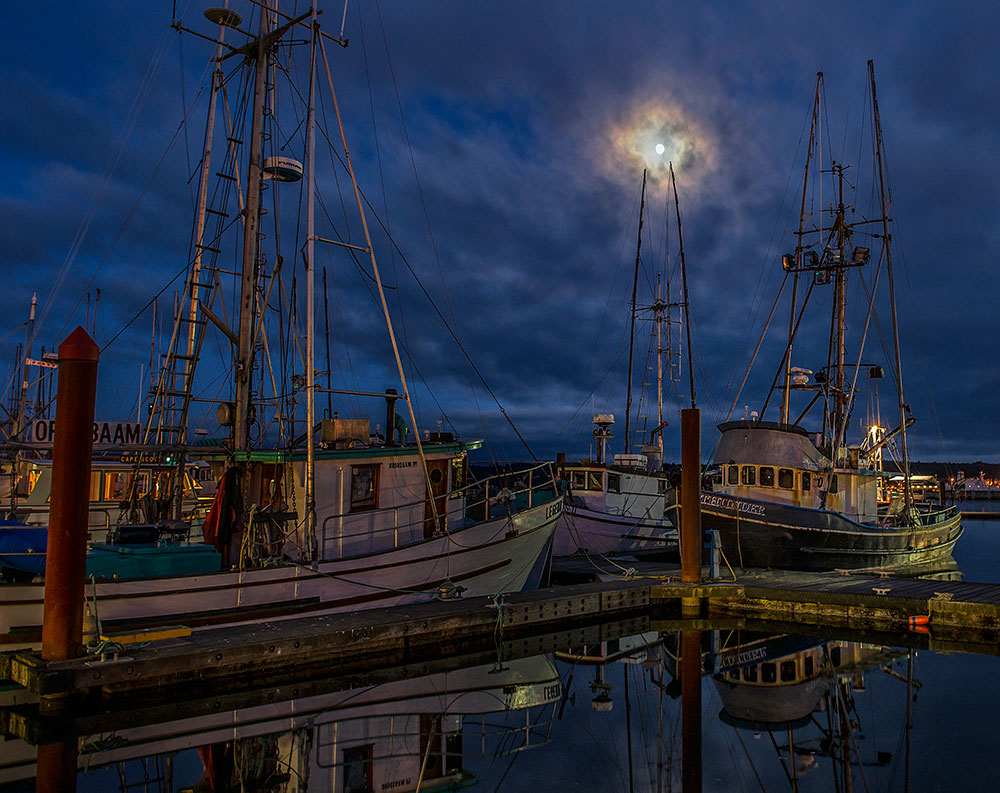
Alex_Morley_Newport_Harbor_Moon.jpg

The Newport harbor is a real working fishing port. This was shot with a full moon at the blue-light time of day right after sunset.

Alex_Morley_Strawberry_Stars-&-Kelp.jpg

In Oregon, the coast is public land to 16 feet above average tide level. The entire coast is accessible for photographers.

Alex_Morley_Wall_Anemone_&_Star.jpg

There are many wonderful tide pools to explore at low tide.  Be sure to bring your knee-high rubber boots to wade through shallow pools.  You will have better opportunities to photograph your subjects.

Alex_Morley_Shore_Acres_Wave_B&W.jpg

Unusual sandstone cliffs make Shore Acres a unique place with big waves. It is mesmerizing.

Alex_Morley_Bandon_Gull.jpg

There are several areas along the Oregon coast with amazing seastacks (big rocks isolated in the water by erosion). They are wonderful for photography. This gull was searching for food.  I was fortunate to have ideal backlight during a break in the clouds.

Alex_Morley_Bandon_Sunset_Orange_Gulls.jpg

Sunsets on the coast can be amazing.  This is with a telephoto at 200 mm to compress the birds and the distant seastacks.

The Oregon Coast is a treasure for photographers. High tides and low tides completely change the way an area appears. Along with the changing tides, sunrises and sunsets offer an infinite opportunity for new images.

 Join the Oregon Coast Photo Caravan September 3 - 9 and visit all of these great places. We only have a few openings. Great locations. Great photo ops. Great fun. And no doubt, great new friends.

Alex Morley

www.alexmorleyphoto.com
Facebook:
www.facebook.com/alex.k.morley
Google+:
http://bit.ly/KUzHF4

• • • • •

Thank you Alex for another great Guest Blog post!

To see some videos that we made during our 2012 Oregon Coast Photo Caravan, see my On-Line Training page.

Explore the light,
Rick

This site powered by (designed and hosted on) Squarespace. Use one-click to get started with your own awesome Squarespace site.